
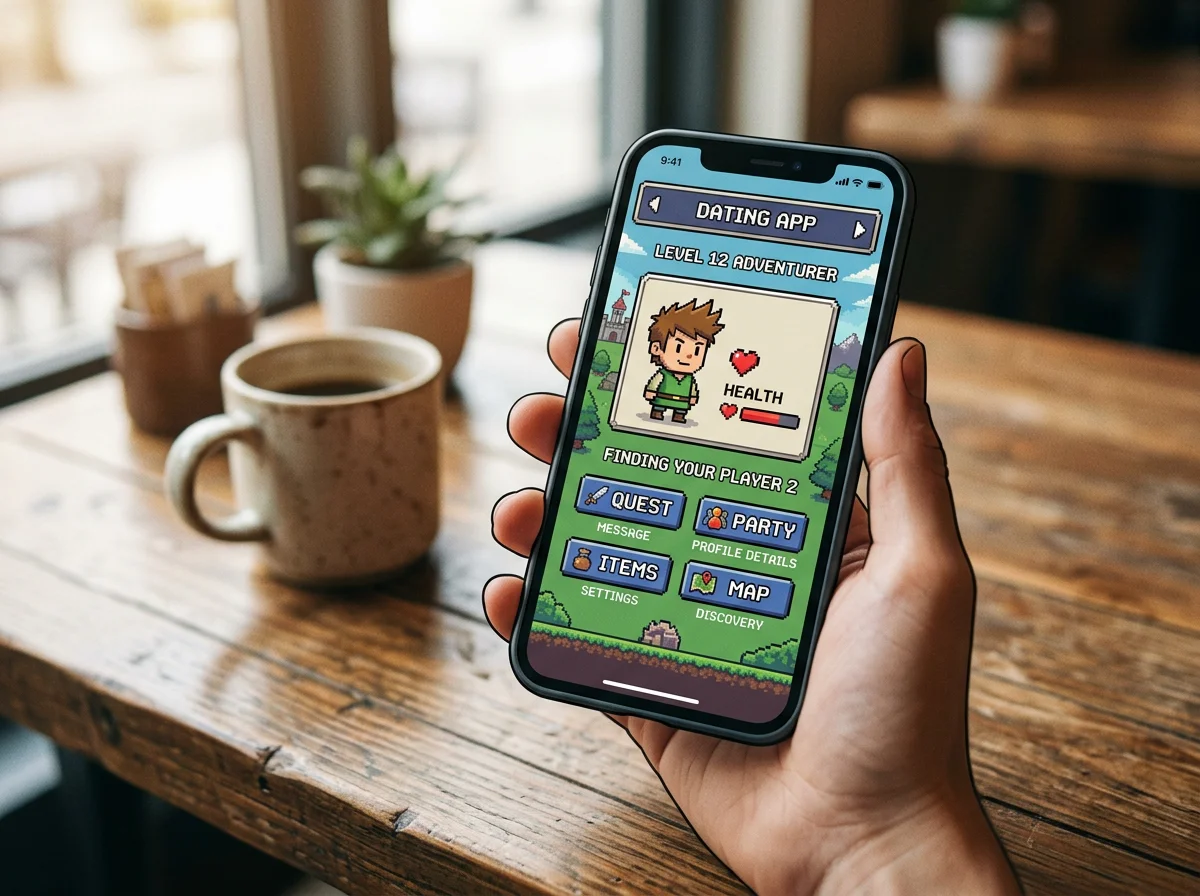
Dating apps sell abundance: thousands of profiles, available at any hour, with no introduction required. For a man with a full calendar, that sounds like efficiency.
The research points the other way. In experiments, the more profiles people reviewed, the more they rejected, and people who picked from a bigger pool ended up less satisfied with their choice. Knowing why can change how you use the apps.
What the Research Found
Psychologists Tila Pronk and Jaap Denissen ran three studies in which people accepted or rejected a series of pictures of potential partners, much like swiping. Their results, published in 2020 in Social Psychological and Personality Science, showed that the chance of accepting someone fell by 27% on average from the first option to the last. The three studies included 778 participants in total. The researchers called the pattern a "rejection mind-set."
Two things explained it. As people kept going, they grew less satisfied with the pictures and more pessimistic about their own chances of dating success. The pictures appeared in random order, so the later ones were not worse. The person viewing them had changed.
Curious how this could work for you? Schedule a conversation with Celine to ask questions and get to know how Jolene & Celine Matchmaking works.
More Options, Less Satisfaction
A second experiment looked at what happens after you choose. At the University of Wisconsin-Madison, Jonathan D'Angelo and Catalina Toma had 152 students pick a potential date from a set of either 6 or 24 people. A week later, those who chose from 24 were less satisfied with their pick and more likely to change it. Satisfaction was lowest when the pool was large and the choice could be reversed, which describes most dating apps. The study appeared in Media Psychology in 2017.
What This Means for Men on the Apps
Some honest limits first. These were controlled experiments with participants mostly in their twenties, not men in their forties on a real app. And in the Pronk and Denissen studies the effect was stronger for women. For men it was weaker in one study, similar in another, and not statistically significant in the third.
That second point matters in a different way. If the pattern holds on real apps, your profile may get a harsher read simply because of where it landed in someone's session. A thin match rate is not always a verdict on you.
How to Swipe Without Closing Off
A few practical adjustments follow from these findings. They are our suggestions, not rules from the studies.
Keep sessions short. Review a small batch, around ten profiles, then stop.
Set your criteria before you open the app. Write down the three or four things that matter most, and judge each profile against that list instead of against the last face you saw.
Treat a match as a decision. When you match with someone promising, pause the swiping until you have met her. In the Wisconsin study, satisfaction was lowest when people had many options and could still change their minds.
Get to a real date quickly. Pictures are what people soured on in the research. An hour in person tells you things a photo cannot.
Where a Matchmaker Fits
Matchmaking starts from the opposite design: a small number of vetted introductions, each chosen against what you said you want, instead of an endless feed. Neither of you is the fortieth profile in a tired scroll.
It does not guarantee chemistry, and no honest matchmaker will promise it. What it does is give each introduction a fair hearing on both sides.
Why It Is Worth Getting Right
The goal was never more matches. It is one good partnership, and that carries real weight. A RAND study that followed more than 4,000 men over 22 years found that married men in their 50s, 60s, and 70s had lower mortality rates than unmarried men. RAND also found the picture is more complicated than marriage simply causing better health, because health affects who marries and when.
The Harvard Study of Adult Development points the same direction: the people most satisfied in their relationships at 50 were the healthiest at 80. Choosing well matters more than choosing from the most options.
Ready to explore matchmaking, or just want to learn how it works? Schedule a conversation with Celine. There is no pressure, just a real conversation about what you are looking for.
